
Brazil in Athens
Moqueca, Brazil's great coastal dish
A coastal stew older than most national cuisines, built on coconut, palm oil and a clay pot. What moqueca is, and why it is the counterweight to the grill.
Ask anyone in Athens to name a Brazilian dish and you will get picanha, possibly feijoada, and then a pause. Moqueca almost never comes up, which is strange, because in Brazil it is one of the two or three dishes that people argue about by region, and arguing about it by region is the surest sign that a dish matters.
It is also the exact opposite of everything else a South American restaurant tends to put in front of you. No charcoal, no smoke, no knife work at the table. It is a stew, it is orange, it arrives in a pot, and it is the best argument on the menu that Brazilian food is a coastal cuisine as much as a grilling one.
What it actually is
Moqueca is a stew of fish or shellfish cooked with onion, tomato, peppers, coriander and lime. That much is common to every version. What separates the versions is fat, and the fat is the whole argument.
The Bahian version, moqueca baiana, is built on two things that arrived from West Africa: coconut milk and dende, the deep orange palm oil that gives the dish its colour and a flavour nothing else produces. It is rich, slightly floral, and unmistakable. The version from Espirito Santo, moqueca capixaba, uses neither, cooks in a black clay pot and comes out lighter, cleaner and redder. People from the two states will tell you the other one is doing it wrong.
The traditional method is also unusual, because there is no browning step. Nothing is fried first. The ingredients go into the pot more or less raw, in layers, and cook in the liquid they release. That is why a good moqueca tastes of its parts rather than of a pan.
Where it comes from, which is older than it sounds
The base technique is indigenous. Pokeka, in Tupi, described fish wrapped in leaves and cooked over embers, and the word survived into Portuguese as moqueca. That part predates the arrival of Europeans entirely.
Then two other histories were added to it. The Portuguese brought tomatoes, onions, garlic and olive oil into the Brazilian kitchen. And enslaved West Africans brought dende and the coconut, and the cooking culture of Bahia that made them central. A moqueca baiana is a dish in which three continents are doing simultaneous work, and unlike a lot of fusion cooking, it has had four hundred years to settle.
It is worth saying plainly that the African contribution is not a footnote here. Dende is not a garnish or a colouring. Take it out and you have a different dish with a different name, which is precisely what the people of Espirito Santo did.
Ours, and why it sits on a grill menu
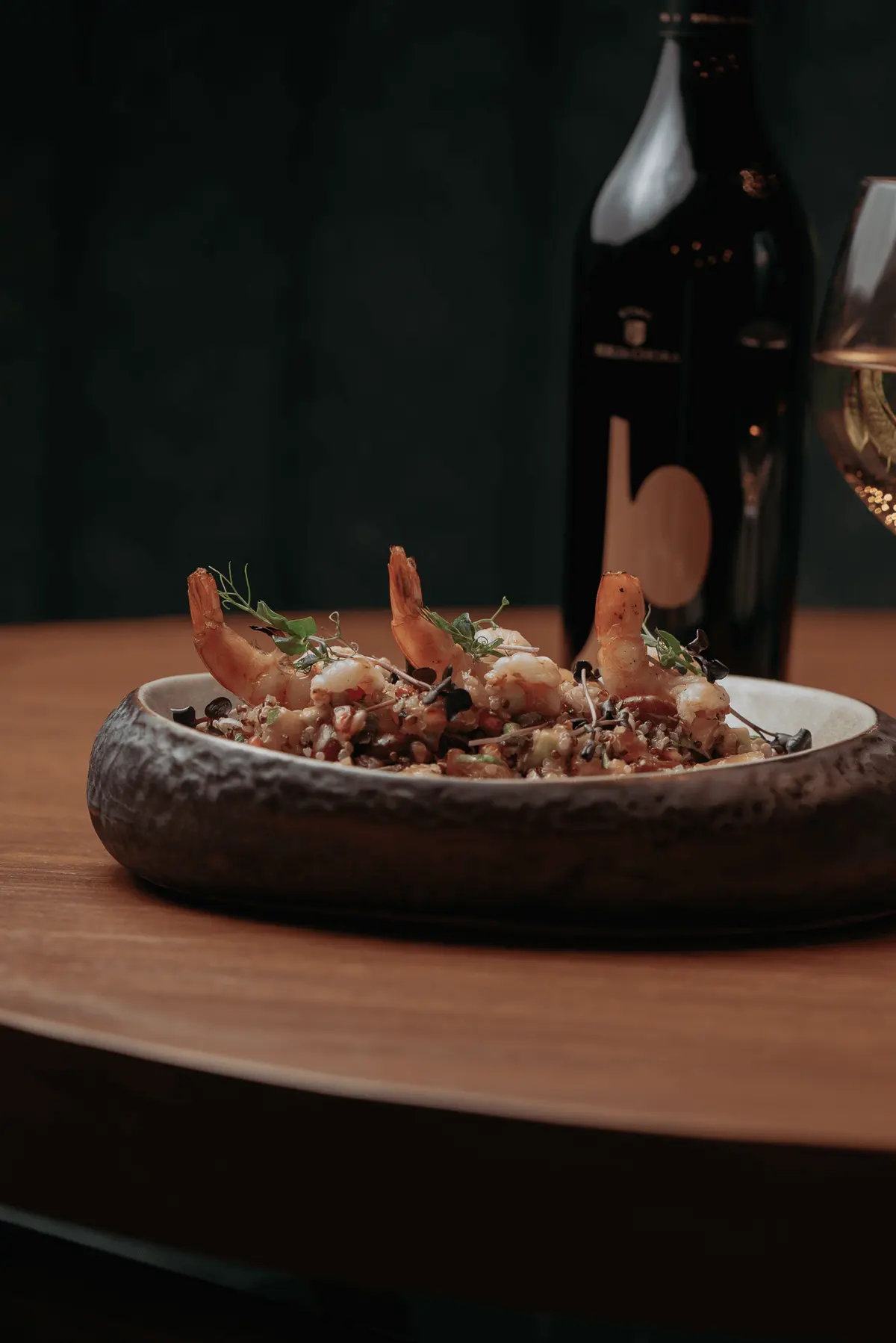
Ours is Moqueca de Camarao, the shrimp version, and it sits in the main courses next to the cuts from the charcoal oven. That placement is deliberate rather than accidental.
A kitchen that runs a grill has a structural problem: almost everything it does well is dry, hot and direct. The plates come out browned and smoky, and after two of them a table starts to want something else. Moqueca is the something else. It is wet, aromatic and gentle, and it resets the palate in a way another grilled thing cannot.
It is also the dish on this menu that travels least far from home. The sushi is Brazil reinterpreting Japan, the tacos are a Mexican borrowing, the grill is the pan South American idiom. The moqueca is just Bahia, cooked the way Bahia cooks it.
How to order it
Order it for the table rather than for yourself. It is a sharing dish in Brazil and it behaves like one here: it goes further than it looks, and it is better eaten slowly with other things around it.
It also wants rice, because the sauce is the point and you will want something to carry it. If you are eating with somebody who has ordered from the grill, the two plates work together rather than competing, and between them they cover most of what the kitchen is actually about.
To drink, something with acid rather than tannin. A Chilean white or a rose will do more for it than a red, and if you want to stay in the region entirely, ask the bar. They will not steer you towards the most expensive thing.
One caveat. It is not the dish to choose for delivery. A stew that has spent twenty minutes in a box is a different stew, because the fish carries on cooking in its own heat the whole way to your door. Eat this one in the room, and order from the grill when you are at home.
Frequently asked questions
- What is moqueca?
- A Brazilian coastal stew of fish or shellfish with onion, tomato, peppers, coriander and lime. The Bahian version adds coconut milk and dende palm oil, which give it its orange colour. Nothing is fried first, so it tastes of its ingredients rather than of a pan.
- Do you serve moqueca?
- Yes, as Moqueca de Camarao, the shrimp version, in the main courses on the dinner menu. It is the one dish on the list that comes from the coast rather than the grill.
- Is moqueca spicy?
- Not in the chilli sense. It is aromatic and rich rather than hot, built on coconut, palm oil and fresh coriander. If heat matters to you either way, tell the floor team when you order.
- What is dende?
- Red palm oil, brought to Brazil from West Africa. It is deep orange, distinctly flavoured and central to Bahian cooking. It is not a colouring: remove it and the dish becomes something else.
- What should I drink with it?
- Something with acidity rather than tannin. A Chilean white or a rose suits it better than a red. Ask the bar if you want to stay with South American bottles.