

The kitchen
Tequila and mezcal, and why they are not the same
One plant family, two very different spirits. What the agave, the oven and the words blanco, reposado and anejo actually tell you before you order.
Almost everyone in Athens met tequila in its worst possible form: a small glass, some salt, a wedge of lime and a reason to make a face. That drink was designed to be got through rather than tasted, and it has cost the category about thirty years of reputation.
Mezcal arrived later and better dressed, and is usually described as the smoky one. That is true and it is also the least interesting thing about it. Here is what actually separates them, which comes down to a plant, an oven and a set of words on a label.
They are both agave, but not both the same agave
Agave is not a cactus. It is a succulent that spends years building sugar in a heart the size of a football, and then, left alone, spends all of it on a single flower spike and dies. Distillers harvest it just before that, which is why the plant's age matters so much and why nothing about this is quick.
Tequila may only be made from one species, blue weber agave, and only in Jalisco and a handful of municipalities in four neighbouring states. That is a narrow rule and it produces a consistent spirit. Mezcal has no such restriction: it can be made from dozens of agave species, most commonly espadin, across a much larger area with Oaxaca at its centre.
This is the first real difference. Tequila is one plant made carefully. Mezcal is a whole genus, and a bottle can taste of the particular agave and the particular hillside it came from in a way tequila mostly does not try to.
The oven is where the smoke comes from
Before you can ferment agave you have to cook it, because the sugar is locked up as inulin and needs heat to become fermentable. How you apply that heat is the single biggest fork in the road.
Tequila is cooked with steam, in brick ovens or in industrial autoclaves. Steam adds no flavour of its own, so what comes out tastes of cooked agave: vegetal, peppery, sometimes faintly sweet.
Mezcal is traditionally roasted in a pit dug into the ground, lined with hot stones, packed with agave, covered over and left for days with a wood fire underneath. The smoke is not an additive or a finish. It is the cooking method, and it goes all the way through. That is why a mezcal tastes smoky before anybody has done anything else to it.
Blanco, reposado, anejo: the only other word you need
Those three words describe time in a barrel and nothing else. Blanco, sometimes called silver, is bottled unaged or nearly so, and it is the most honest version of whatever the distillery made, because there is no wood hiding anything. Reposado has rested in oak for months, which rounds it off and picks up a little colour. Anejo has spent a year or more in barrel and starts to drift towards the territory of aged spirits generally.
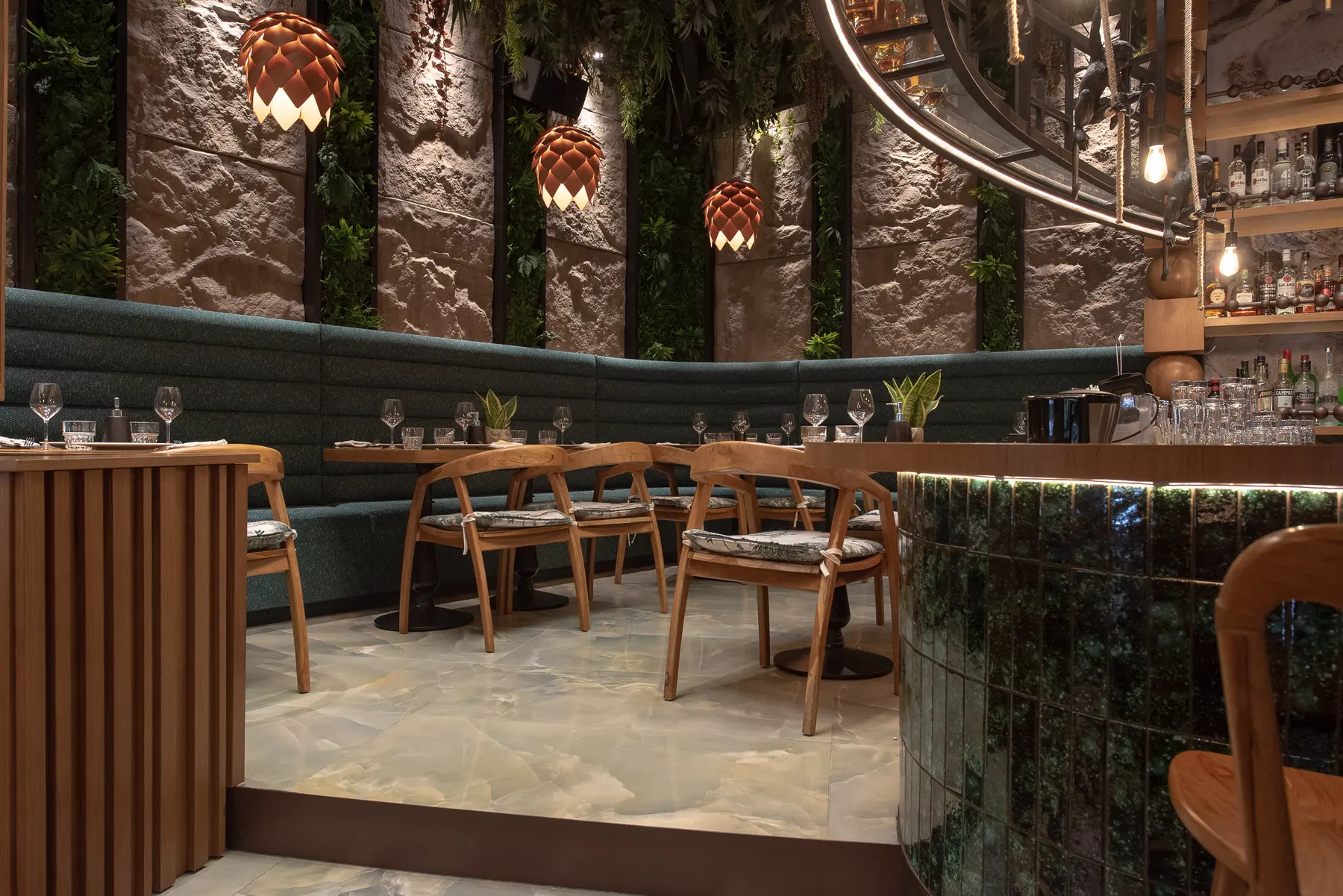
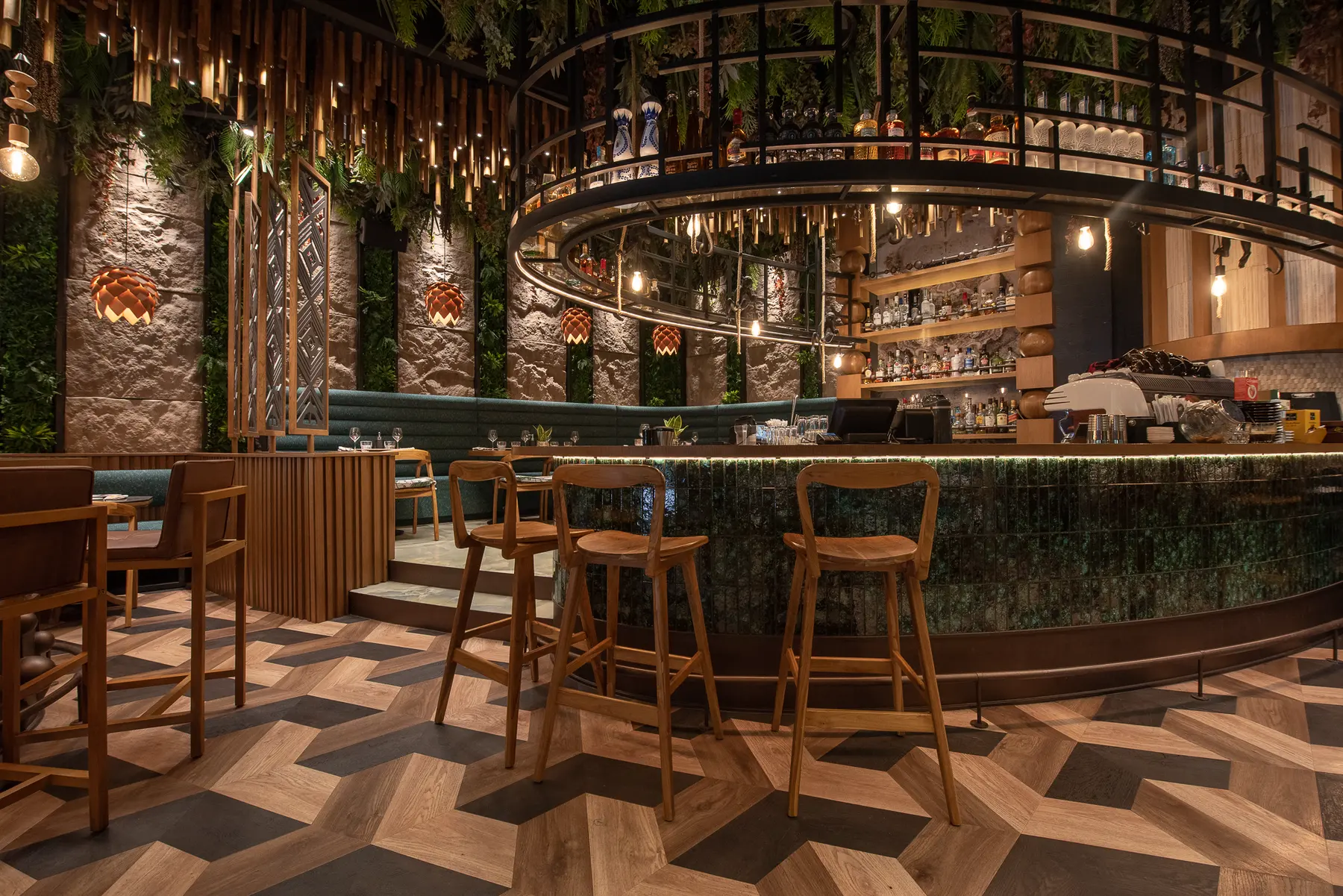
The bar carries that whole ladder. Cazadores and Patron each appear in both blanco and reposado, Patron again as an anejo, and at the top of the list sit Don Julio 1942, Jose Cuervo Reserva de la Familia and Clase Azul Reposado. On the mezcal side there is Bruxo-X, Vida and Casamigos Mezcal.
A useful thing to know: more ageing is not better, it is different. A great blanco next to a mediocre anejo will win easily. If you want to taste what the distillery actually does, start at the unaged end of the list.
How to drink it, and what it does with this food
Neither of these wants salt and lime, and neither wants to be thrown back. Both are sipped, at room temperature, from a normal glass. The lime ritual exists to cover a spirit that needed covering, and none of these do.
With food, the pairing is better than people expect. Agave spirits have a vegetal, mineral edge that does something specific to charcoal, which makes them work with the grill side of the menu in a way most spirits do not. A mezcal alongside something smoked doubles the smoke, which is either exactly what you want or exactly what you do not.
The other place they belong is later. The bar runs long after the kitchen has slowed, and a mezcal at one in the morning during the late part of the night is a different proposition from a cocktail. It is slower, and it is meant to be.
Frequently asked questions
- What is the difference between tequila and mezcal?
- Tequila is made only from blue weber agave, steamed in ovens, and only in Jalisco and a few neighbouring municipalities. Mezcal can use dozens of agave species, is roasted in underground pits over wood, and is centred on Oaxaca. The smoke comes from the pit.
- Is all tequila also mezcal?
- Technically tequila is a type of agave spirit with its own protected designation, so in the broad sense it sits in the same family. In practice, and in law, they are labelled and regulated separately.
- What do blanco, reposado and anejo mean?
- Time in oak. Blanco is unaged or nearly so, reposado has rested in barrel for months, and anejo for a year or more. More ageing is not better, just different, and a good blanco beats a mediocre anejo.
- What tequila and mezcal do you have?
- Cazadores and Patron in blanco and reposado, Patron anejo, Don Julio 1942, Jose Cuervo Reserva de la Familia and Clase Azul Reposado. The mezcals are Bruxo-X, Vida and Casamigos Mezcal.
- Should I drink it with salt and lime?
- No. Everything on this shelf is meant to be sipped at room temperature from a normal glass. The salt and lime ritual was built around spirits that needed hiding.